The best riders I know rarely look busy. They flow through a lane of broken tarmac, past a line of parked cars, and around a blind bend without ever seeming to react to anything. That calm isn't luck or nerve; it's the product of seeing trouble early and dealing with it while it's still small. Riding safely and smoothly is less about quick hands than it is about slow, deliberate eyes.
Where Your Eyes Belong#
Most nervous riders make the same mistake: they stare at the patch of road just in front of their wheel. It feels safe because it's the thing that will hit you first, but it's exactly backwards. By the time a pothole enters that near zone, you're already on top of it and your only options are ugly ones.
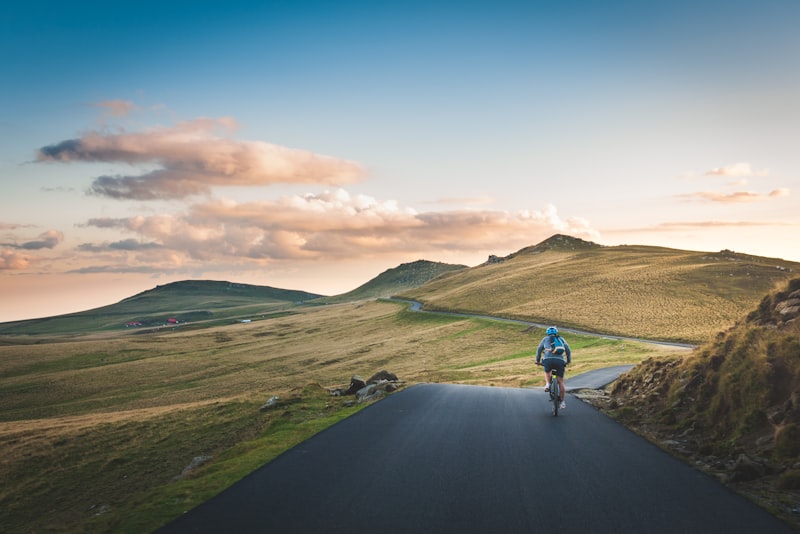
The fix is to push your gaze out. On an open road at a steady pace, I want my primary focus roughly where I'll be in eight to twelve seconds — often a good hundred metres up the road, further on a fast descent. That's not a fixed number to memorise; it scales with speed. The faster you go, the further ahead you look, because your reaction window in metres has to stay the same even as the seconds shrink.
What you're doing is building a moving picture:
- The far point tells you where the road goes and whether anything major is developing — a junction, a queue of traffic, a change in surface colour.
- The middle ground is where you make decisions and commit to a line.
- The near ground you should already know by heart, because you read it seconds ago.
Your eyes don't lock on the far point; they flick. Scan out, pull back, check the mirror or over your shoulder, return to the distance. It's a rhythm, and like any rhythm it gets smoother with practice until you stop noticing you're doing it.
The habit of the middle distance#
If I had to give a new rider one drill, it would be this: every few seconds, consciously name the furthest thing you can see clearly and say what it's doing. "Car waiting at that side road." "Drain cover, left third." "Road curls right past the hedge." Out loud at first, feeling faintly ridiculous, then silently, then not at all — it just becomes how you see. The point is to convert looking into reading, because a hazard you've named is a hazard you've already half-dealt with.
Choosing a Line#
A line is simply the path your tyres trace down the road. Good line choice does three jobs at once: it keeps you on the smoothest available surface, it keeps you predictable to everyone else, and it buys you room to move if something changes.
Smooth beats short#
The instinct to hug the gutter is a strong one, and it's usually wrong. The edge of the road is where the debris collects — grit washed down by rain, broken glass, the ragged crumbling seam where tarmac meets kerb. It's also where drainage grates lurk, some of them with slots wide enough to swallow a road tyre.
I'd rather ride a metre out from the edge on clean, consistent tarmac than skim the gutter to save a few centimetres. That position, sometimes called the secondary position, gives you a buffer on your left and makes you visible in a driver's mirror. When the road narrows, a junction approaches, or the surface deteriorates, moving out to the primary position — roughly the centre of the lane — is often the safer choice, because it discourages a squeeze-past at exactly the moment you have least room to spare.
Straighten what you can#
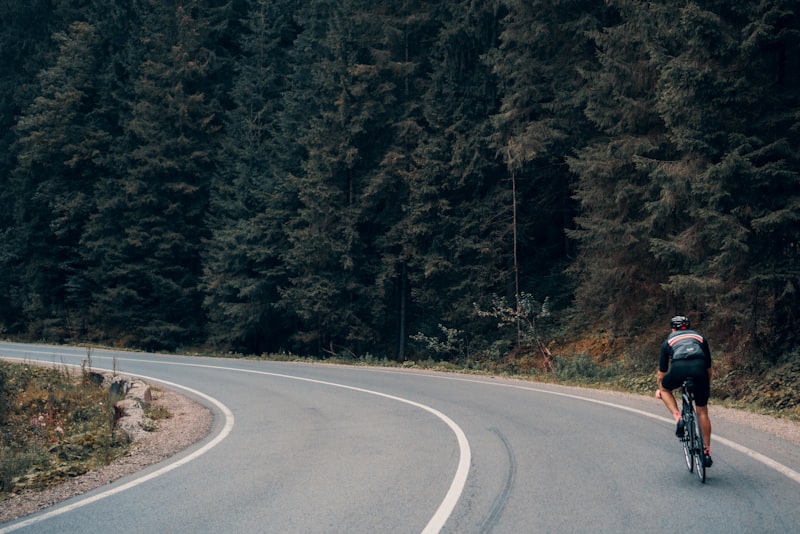
Through a series of gentle bends, the fastest and calmest line isn't the one that traces the middle of the lane like a train on rails. It's the one that smooths the corners out — entering wide, clipping the apex, drifting wide again on exit — so your bike leans less and your speed stays even. On the open road you must temper this heavily: never straighten a corner across the centre line, and never take up road space you can't see is empty. The blind side of a right-hander is exactly where an oncoming car lives. A slightly slower, tighter line that keeps you unmistakably on your own side beats an elegant one that gambles on the bit of road you can't see.
Reading the Surface#
The road tells you what's coming if you know its vocabulary. A few things I read almost without thinking:
- Colour and sheen. A darker, glossier band across the tarmac after rain often means standing water or a slick of diesel — treat both as low grip and avoid leaning or braking hard through them. A pale, dusty patch can be spilled gravel.
- Shadows and dappled light. Under trees, shade hides potholes and hangs onto damp and ice long after the open road has dried. On a cold morning, the sheltered dip is where the frost survives.
- Repair scars. Utility trenches cut across a lane and are patched back proud or sunken, almost never flush. The join runs the way the trench runs, so you can often see the ridge coming and adjust before your wheel finds it.
- The tell of parked cars. A wet strip of road in dry weather beside a parked van usually means it just pulled in — or is about to pull out. Brake lights, exhaust haze, a wheel turned toward the road, a silhouette in the driver's seat: all of it says this door might open or this car might move.
The trade-off worth naming: chasing the perfect surface line can pull you into unpredictable weaving, which is its own hazard. If dodging every small imperfection means darting side to side, take the small hits instead. A steady line through minor roughness is safer than a clean line ridden nervously. Get out of the saddle, unweight the bars, let the bike float over the bad bit, and keep your track straight.
Anticipating What Others Will Do#
Hazard anticipation is really just assuming other people are human. Not reckless — human. Drivers are distracted, pedestrians misjudge, dogs do what dogs do. Your job is to leave margin for all of it.
Junctions and driveways#
Every side road, every driveway, every supermarket exit is a place where a vehicle might cross your path. I look for the cues well before I arrive:
- Is the car actually stopped, or just rolling slowly? A car that's still moving hasn't seen you yet.
- Where are the front wheels pointed? They turn before the car does.
- Can you see the driver's face? If you can't see them, assume they can't see you.
When I pass a line of junctions, I'll often ease off the pace slightly and drift toward the primary position so I'm both more visible and further from a car nosing out. Covering the brakes — resting a finger or two on the levers without pulling — shaves a surprising amount off your reaction time without slowing you at all.
The dooring zone#
Parked cars deserve their own paragraph because the open door is one of the nastiest hazards on an urban road: it appears without warning and there's no time to react once it's swinging. The defence is positional and permanent. Ride a door's width out from parked cars, all the time, whether or not you can see anyone inside. Yes, it puts you closer to moving traffic, and yes, that feels counterintuitive. But you can see and negotiate with the traffic behind you; you cannot negotiate with a door. Hold that line steadily rather than tucking in between gaps and popping out again — the weaving is what makes drivers misjudge you.
Room to Move#
Everything above buys you one thing: options. A rider who's read the road early, chosen a smooth central-ish line, and left space around themselves almost never has to make a violent move. The swerve, the panic grab of the brakes, the wobble into traffic — these are what happen when the road surprises you, and the whole discipline of reading ahead exists to make sure it doesn't.
Some practical ways to keep your margin intact:
- Don't ride into a box you can't get out of. If you're boxed between a kerb and a car with a pothole coming, you created that trap several seconds ago by not planning an escape. Leave yourself an out.
- Brake early and gently, in a straight line. A little speed shed before a bend or a bad patch means you can roll through it under control rather than braking mid-corner where grip is already spoken for.
- Signal and hold your line through it. A predictable rider is a safe rider. If you must move out for an obstacle, look, signal, then move decisively and settle — don't drift ambiguously.
A caveat worth being honest about: none of this makes you invulnerable, and it isn't a substitute for lights, a visible position, or simply choosing quieter roads when the traffic is heavy and the light is poor. Skill lowers your risk; it doesn't erase it. The rider who understands that is the one who keeps riding for decades.
Putting It Together#
On your next ride, don't try to do all of this at once — you'll tie yourself in knots. Pick one thing. For a week, just push your eyes further up the road and notice how much earlier hazards announce themselves. The week after, pay attention to your line past parked cars. Layer the habits in slowly and they'll fuse into that unhurried competence you admire in better riders.
Reading the road isn't a talent you're born with. It's a set of small, learnable habits of the eyes, stacked until they run on their own. Master them and the road stops throwing surprises at you — because you were watching for them all along, and dealt with each one while it was still nothing at all.